
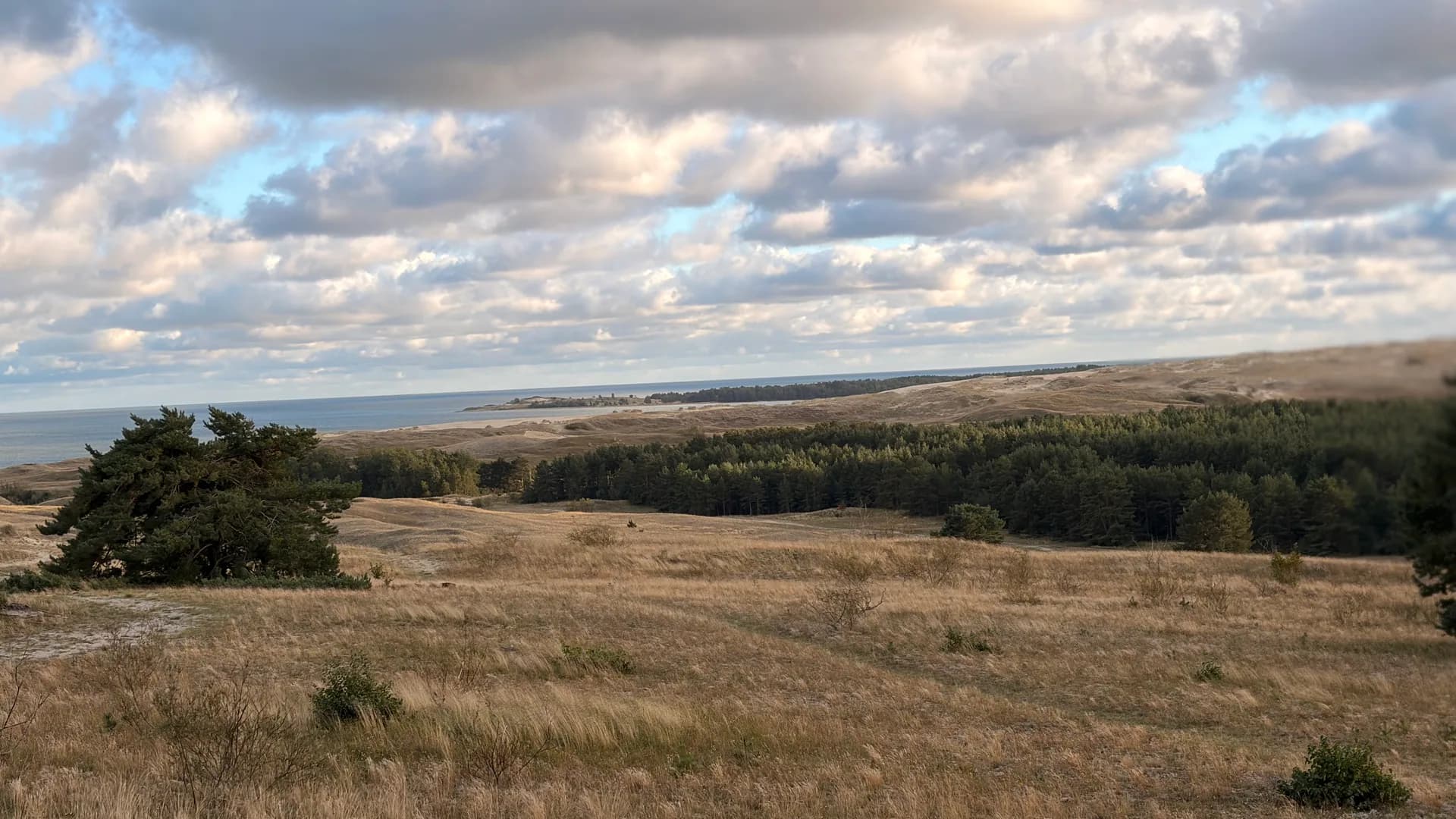
Northernmost settlement
Juodkrantė
The first settlement after the ferry from Klaipėda. Greener and more wooded than Nida, with more forest than sand.
What makes this place interesting
Juodkrantė is where the spit feels most like forest and least like sand. Dune-seekers may be disappointed at first; those who stay often grow to love it most.
Three very different things fit into one small settlement: a wooden sculpture hill, 19th-century amber industry and one of Lithuania's largest bird colonies.
Juodkrantė is also an old resort, with a promenade and villas whose scale sets them apart from the rest of the spit.
What to see
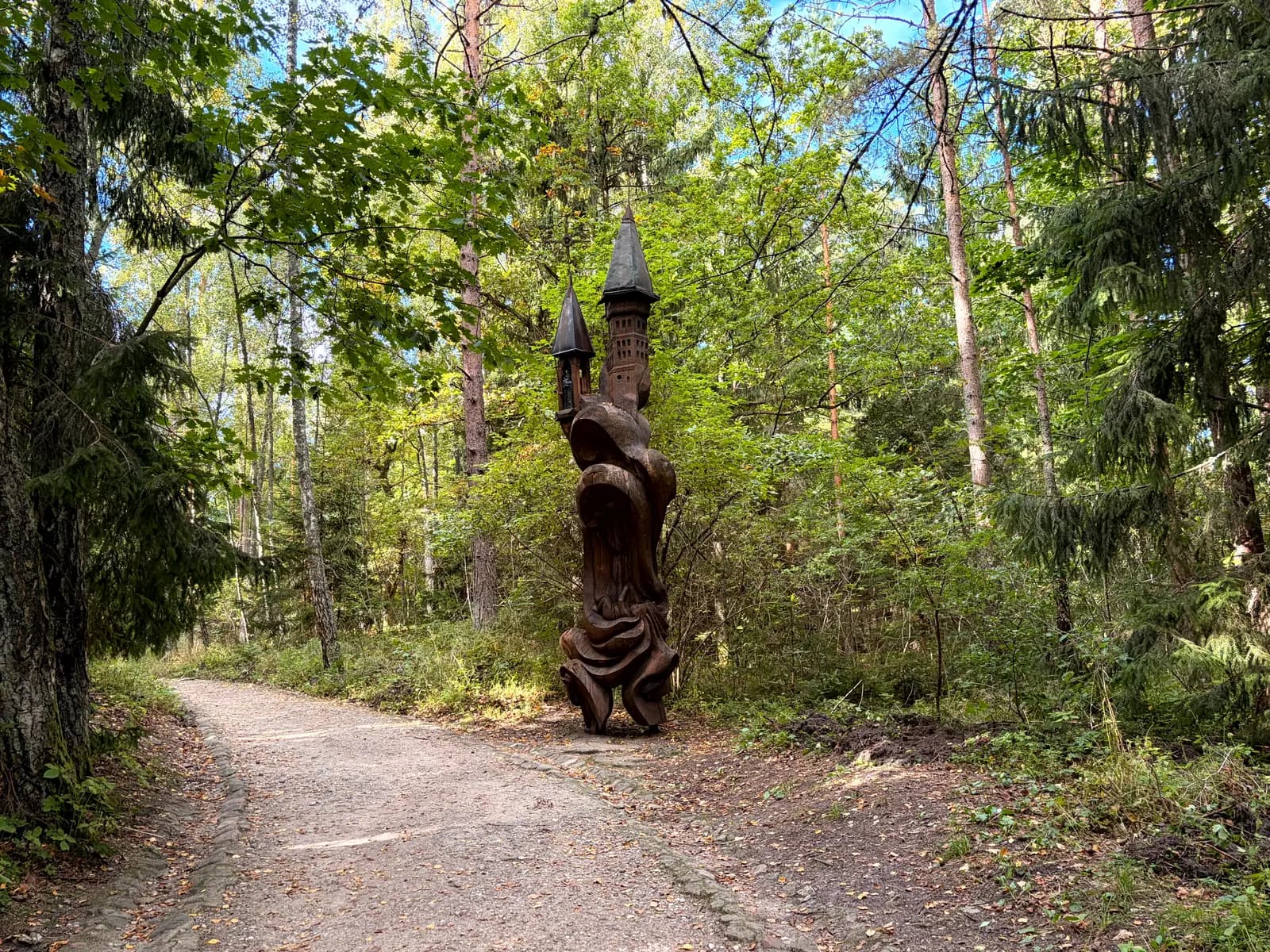
Hill of Witches
A pine forest sculpture trail begun in 1979. Its characters come from Lithuanian fairy tales and legends, arranged as a story across the hill, though many visitors walk past without knowing what they see.
Busy in summer. Early mornings and evenings are quieter.
Amber Bay
Industrial amber extraction operated around Juodkrantė in the second half of the 19th century, an unusual episode of spit history that explains the bay's name.
Heron and cormorant colony
A large colony near the settlement is heard before it is seen. Trees beneath it stand dead: the birds are numerous enough to change the forest themselves.
Watch only from the designated viewing platform. There is a strong smell in summer.
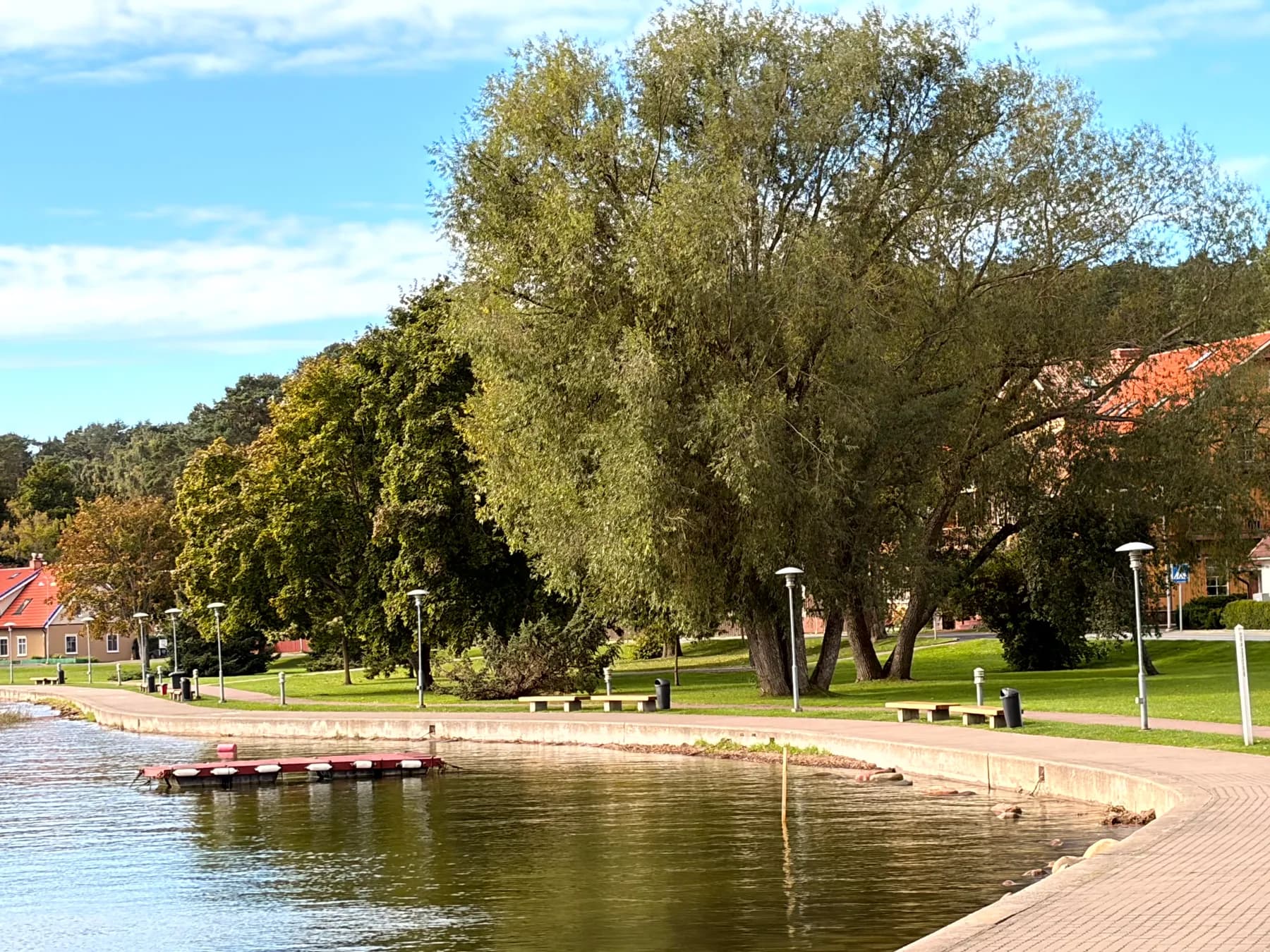
Lagoon promenade
A lime-tree avenue, benches, boat landing and old villas. The best place to understand the spit’s resort life a century ago.
Forest and trails
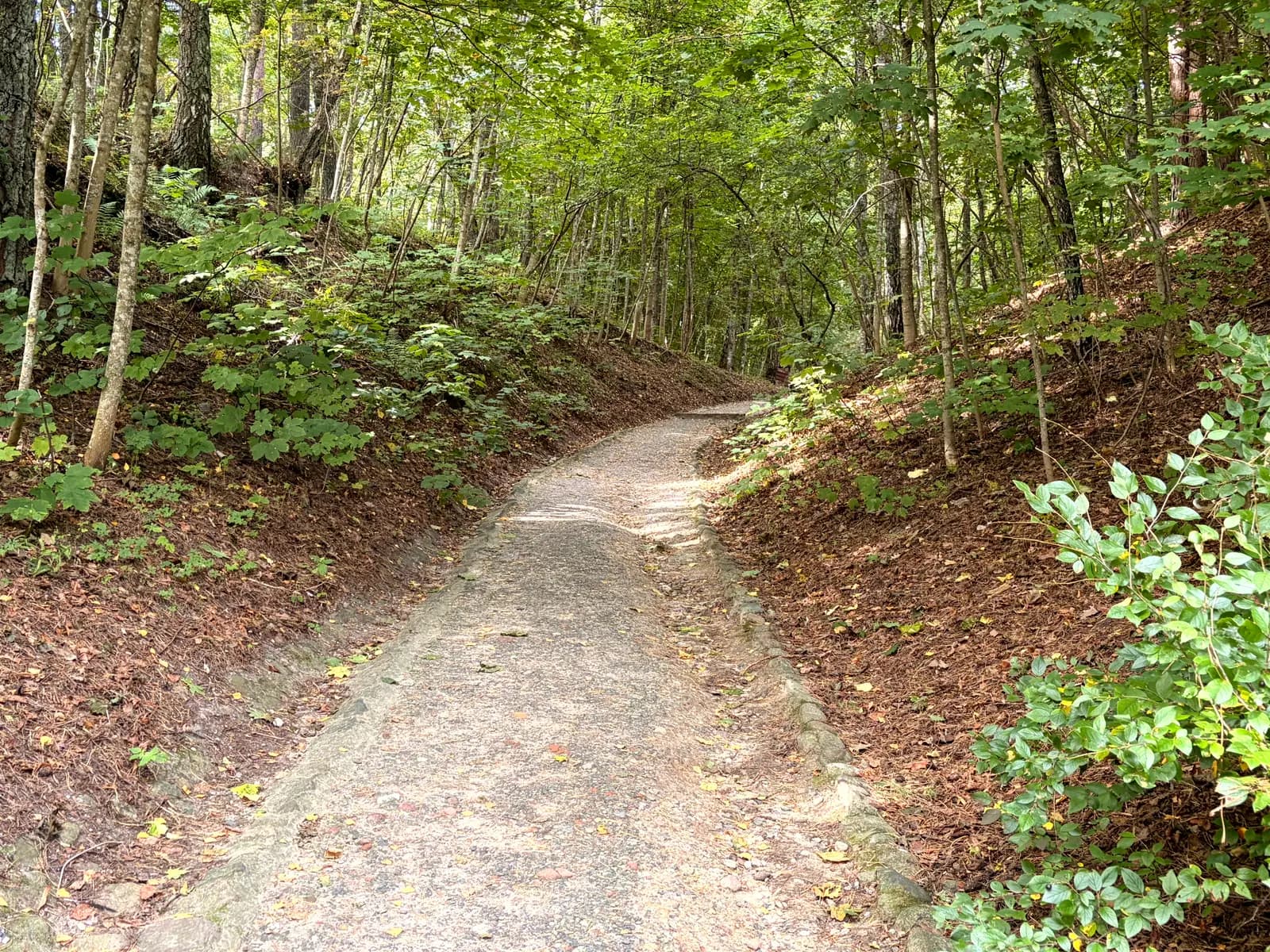
Dense pine forest and paths surround the settlement. In poor weather Juodkrantė is more sheltered than Nida, with much less wind among the trees.
Local context
When amber was mined on the spit
In the second half of the 19th century, the lagoon near Juodkrantė was dredged, bringing up amber with sand from the bottom. This was industry, not beach collecting after storms.
This explains why Juodkrantė briefly grew faster than other settlements and why its history differs from that of fishing villages.
A place ruled by birds
The nearby colony is one of Lithuania's largest of its kind. It is lively and noisy, and its effect on the forest is plain to see.
It also shows that the spit is protected for very specific reasons, not simply for its beauty.
Practical information
- First from the ferry
- Juodkrantė is the quickest of the settlements to reach, making it ideal if you have just half a day.
- Insects
- Bring insect repellent for the forest, especially after rain. The colony has a strong smell in summer, worth knowing in advance.
- With children
- The Hill of Witches works better than any story: sculptures can be seen up close. The trail is hilly and has stairs, but is short.
- Poor weather
- On a rainy day Juodkrantė is more comfortable than Nida: most of the route is in forest with little wind.
Tours
Tours in this area
My Juodkrantė tour brings its three layers, sculptures, amber and birds, into one story.
Blog
Related articles
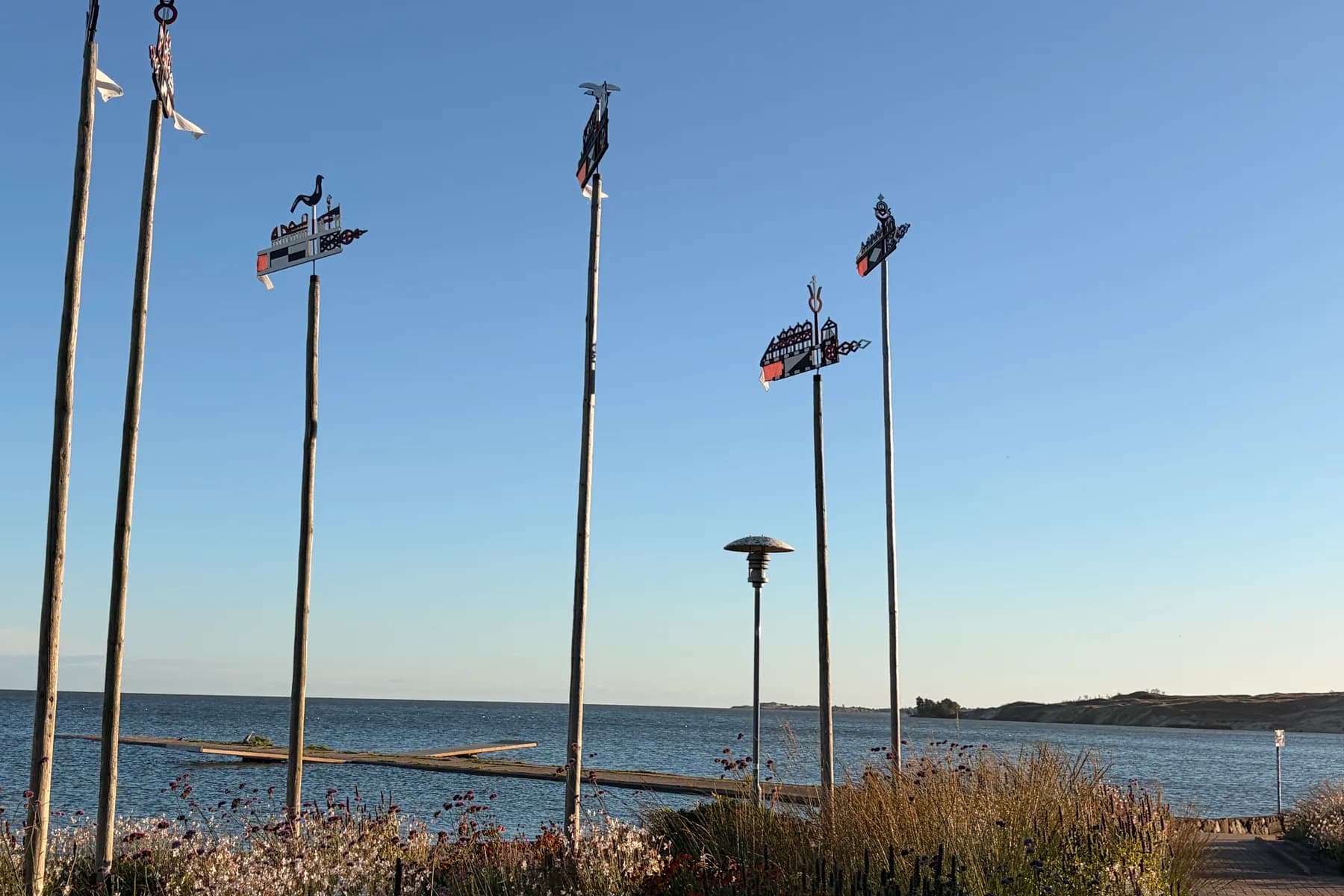
Things to do on the Curonian Spit
The spit is more than Nida. Explore its four settlements over a day, weekend or week, with ideas for rainy weather too.
9 min. read
Nearby
Other settlements on the spit
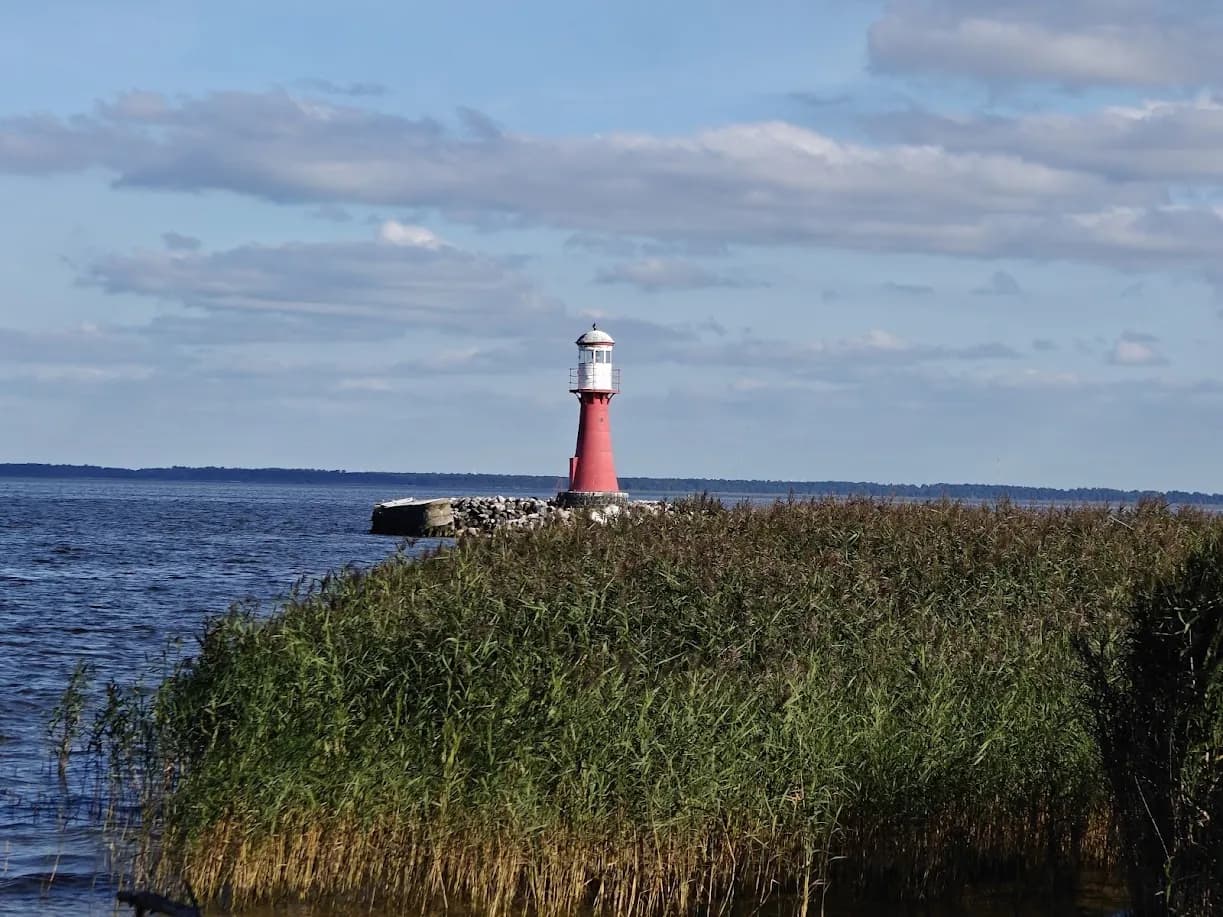
Smallest settlement
Pervalka
Neringa's smallest settlement. Nearby lie the grey, or dead, dunes, whose sands have already been covered by moss.
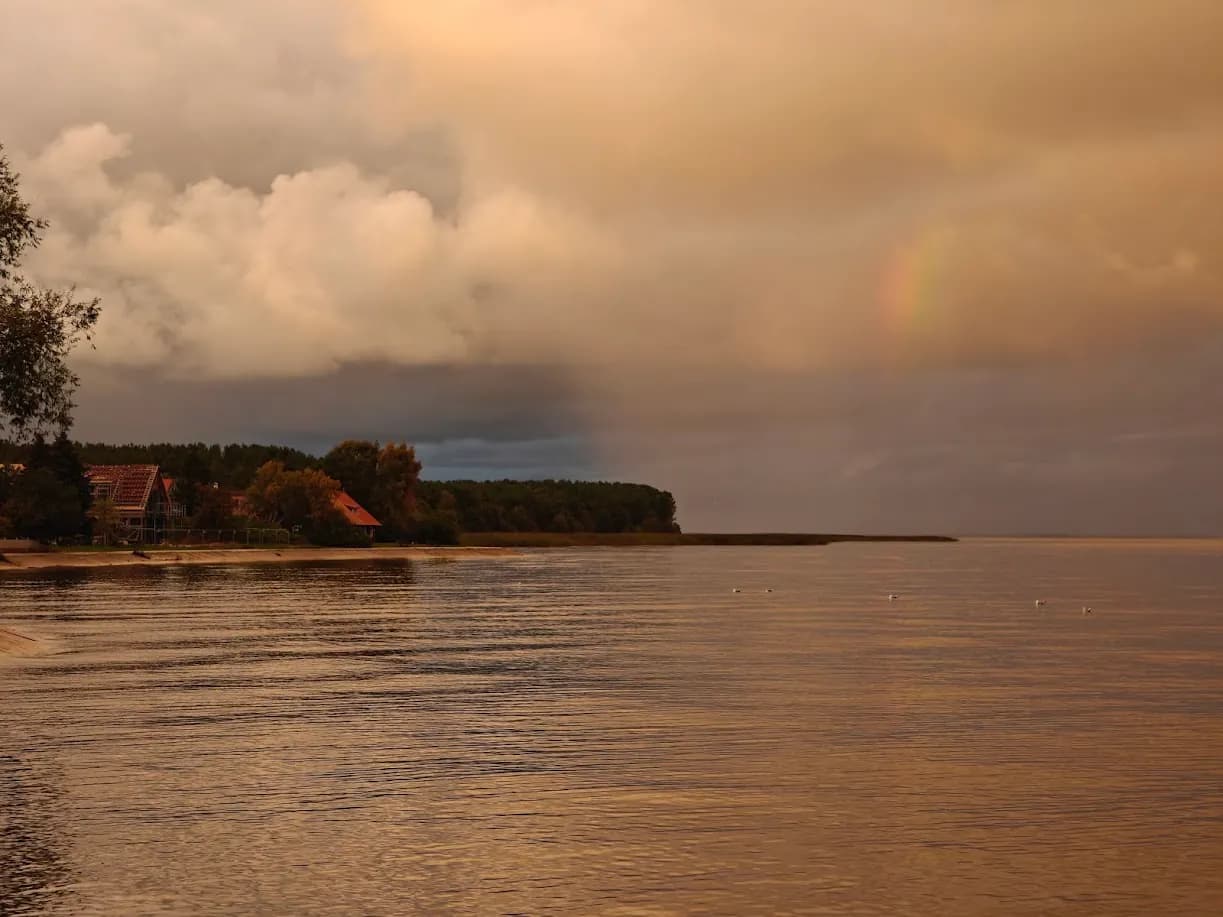
Quietest of the four
Preila
Preila is a small village between Pervalka and Nida, founded in the mid-19th century. It is ideal for a quiet walk by the lagoon and discovering the history of a fishing village.
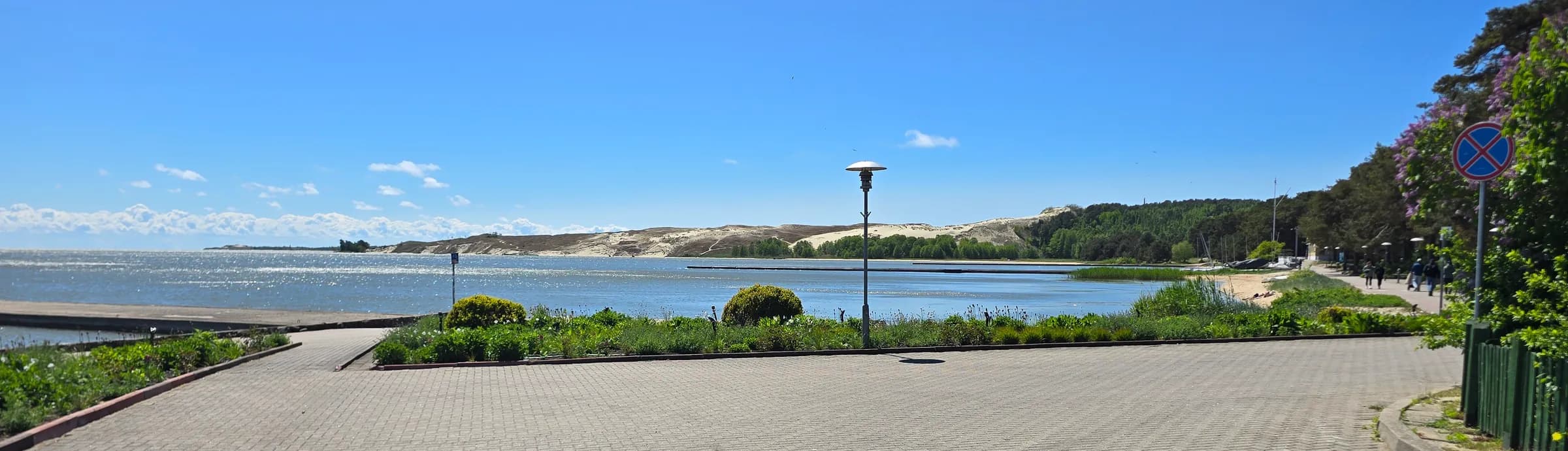
Neringa's centre
Nida
Neringa's largest settlement, where most visitors begin. You can explore it on foot in half a day, but without context much goes unnoticed.
Booking
Let's agree on a date
Tell me when you are coming and how many days you have. I will check availability and suggest what can realistically fit into that time.
+370 641 53311
I reply within 24 hours